GS1 Digital Link
Data Carriers: QR, Data Matrix and NFC/RFID
Which data carrier for the Digital Product Passport? Pros, cons and selection criteria for QR codes, Data Matrix and NFC/RFID tags.
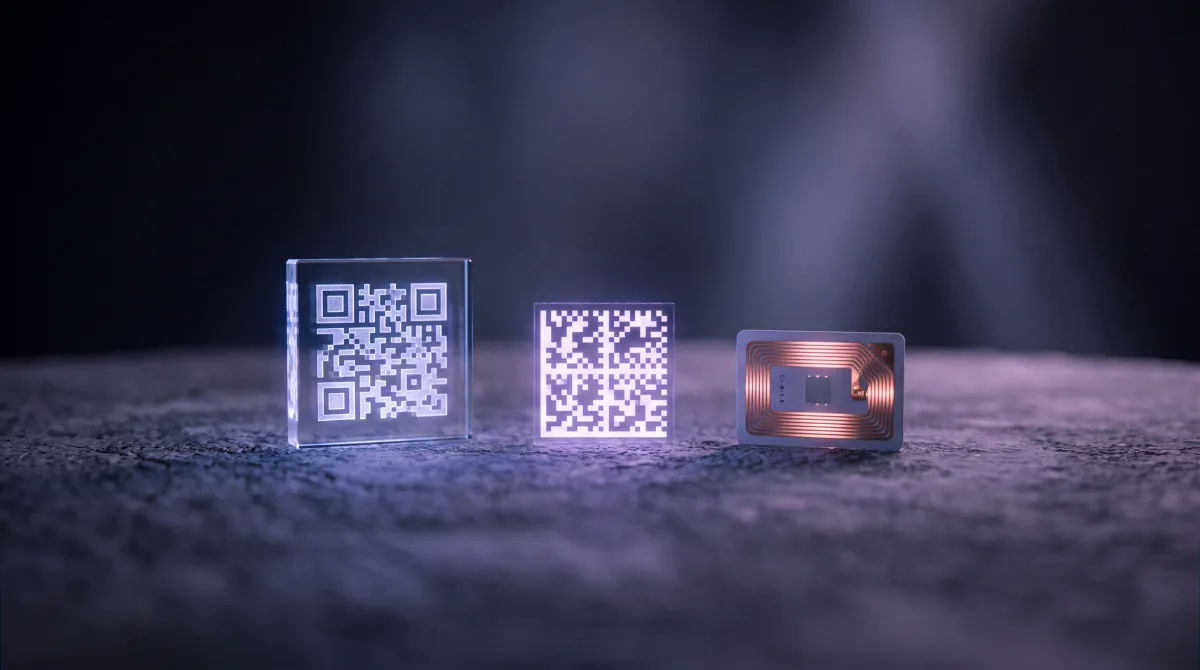
Access to a Digital Product Passport begins with a physical data carrier on the product. EN 18220 requires the carrier to be readable, but which carrier you choose is up to you — and your product.
Three main options
QR code
The most common choice. Cheap, readable by any phone camera, print-durable, and able to encode a GS1 Digital Link URL. For most product groups it is the default.
Data Matrix
Similar to QR but fits into much smaller areas. Ideal for small electronic components, medical devices and laser-marked metal parts. GS1 Data Matrix carries the same Digital Link structure.
NFC / RFID
A contactless chip. It needs no camera; it is read by a phone tap or a bulk reader. It is advantageous for washable tags in textiles or bulk inventory in logistics, but its unit cost is higher.
Selection criteria
Durability and placement
The carrier must stay readable throughout the product's expected life. A QR printed on a wearing surface can become unreadable within a few years. On demanding products such as tyres, permanent marking methods (embossing, laser) are preferred.
Summary
For most exporters, the QR code is the right start thanks to its balance of cost and accessibility. But your product's physics and use environment determine the carrier choice. Whichever you pick, the data behind it must be verifiable and standards-compliant. For the broader picture, return to what a DPP is.
Frequently asked questions
Which carrier should I choose?
QR for consumer access, Data Matrix on small parts, RAIN RFID in logistics. See NFC and RFID for DPP.
Will the label survive washing?
In textiles, test scanning after 30 wash cycles. See DPP labelling for apparel.
What should I use on metal?
A laser-marked Data Matrix is the common answer. See Data Matrix and direct part marking.