Standards
What Is EN 18220? Data Carrier and Access
EN 18220 defines access to the Digital Product Passport and its data carrier: free, app-free and smartphone-readable access principles.

A Digital Product Passport is a data set — but how that data is reached in practice matters just as much as the data itself. EN 18220 defines exactly this: access to the passport and its data carrier. It forms the access pillar of the EN standards family.
Core principles
At the heart of EN 18220 (and DPP access principles in general) sit these rules:
- Free access: No fee may be charged to view the passport.
- App-free: No dedicated mobile app should be required; a standard web browser must suffice.
- Smartphone-readable: Any modern phone's camera must be able to read the carrier.
- Persistence: The link must keep working throughout the product's expected lifetime.
These principles require the passport page to be lightweight, fast and free of external dependencies — like a product's physical label, it must work "anytime, anywhere."
The data carrier
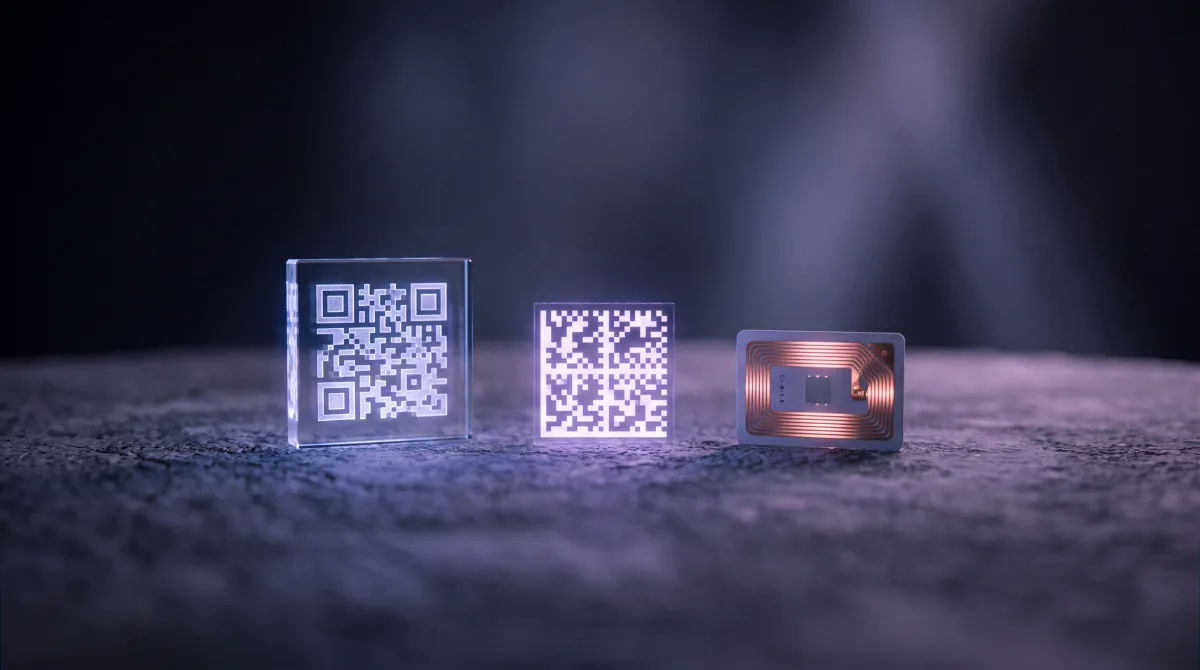
Access usually begins with a data carrier on the product: most often a QR code, sometimes a Data Matrix or NFC/RFID tag. This carrier encodes a resolvable web link. We compare carrier types and selection criteria in data carriers.
The preferred structure for the encoded link is GS1 Digital Link: the same URL both routes humans to the passport page and lets machines pull structured data.
Layered access
EN 18220 separates public information from authorisation-gated information. A consumer sees the public summary, while a market-surveillance authority or authorised recycler can reach restricted data tiers. This distinction balances trade secrets against transparency.
Summary
EN 18220 standardises "how" the passport becomes reachable. For a manufacturer, that means your page must be fast, free and browser-accessible. IDPP's public passport surface is designed precisely around these principles. Next up: understanding how content is made verifiable and trustworthy.
Frequently asked questions
Can I use NFC only?
In practice no: not every device reads NFC. Use it alongside a QR. See NFC and RFID for DPP.
How large should the QR be?
Module size should generally stay at or above 0.4 mm. See DPP QR codes: size, placement and print.
Can I require registration for access?
No. The public tier must be free and unobstructed. See DPP access rights.