Verification
DPP Verification, Trust and Digital Signatures
How is the accuracy of data in a Digital Product Passport proven? Building trust with digital signatures, versioning and tamper-evident records.
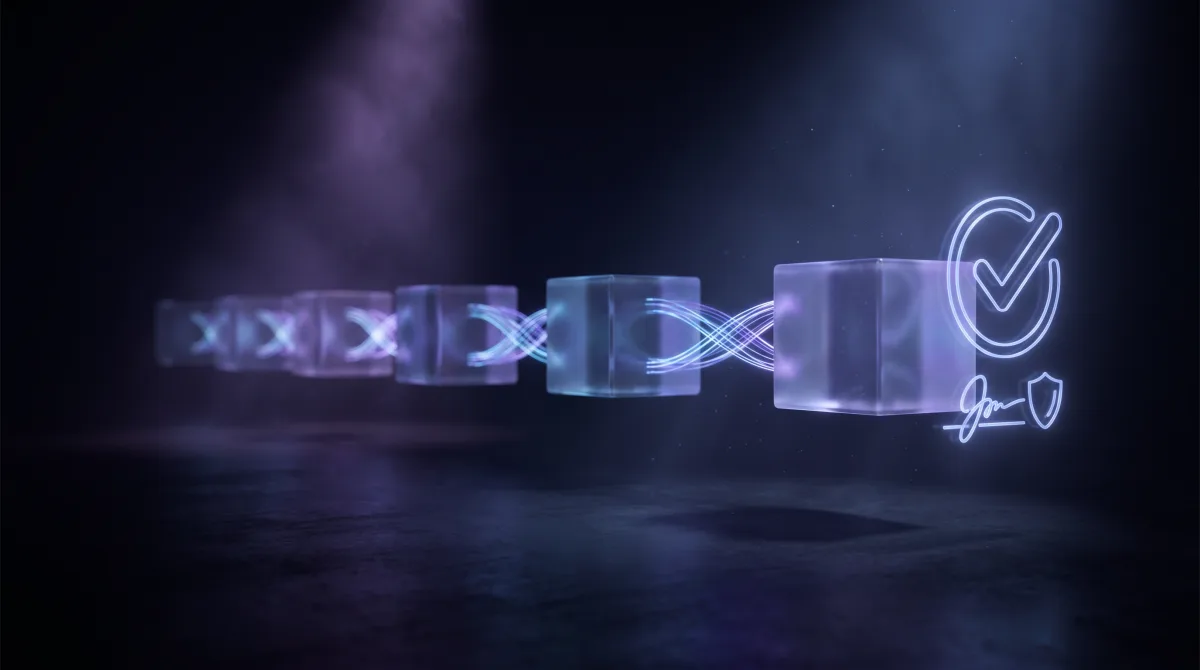
A Digital Product Passport is valuable only if its data can be trusted. A buyer, auditor or recycler must be able to ask "is this 40% recycled-content claim genuine, or was it changed later?" Verification is exactly what guarantees this.
The three components of trust
- Integrity: was the data changed after publication?
- Authenticity: did the claimed manufacturer really publish this passport?
- Traceability: is every version and change on record?
How does a digital signature help?
A published passport version can be digitally signed: a cryptographic hash of the content is computed and signed with the manufacturer's private key. Anyone can verify this signature with the manufacturer's public key to prove the content is unchanged. Change a single character and the signature fails.
In IDPP, every published passport version is verified with a recomputed hash of its content and an Ed25519 signature; the public page shows a "Verified" badge for verified content.
Versioning and immutability
Passports get updated over time (new certificate, corrected data). The right approach is not to overwrite the old version but to append a version: each version stays immutable and history remains traceable. This is critical for both audit and trust, and combined with restricted-access records it forms a complete trail.
Relationship to standards
Verification mechanisms are not arbitrary; the EN standards family and interoperability principles let different systems understand the same signature and data model. Without this, verification would be a black box that works differently at every manufacturer.
For exporters
Verification is the difference between "I collected the data" and "my data is trusted." EU buyers and authorities increasingly expect signed, traceable data. So when choosing your passport tool, treat verifiable output and versioning capability as a requirement. Make the process the final step of your data-collection checklist.
Frequently asked questions
Is blockchain required?
No. Signed versions and verifiable credentials are sufficient. See verifiable credentials.
Which signature level?
At least an advanced electronic seal; a qualified seal where regulatory weight is higher. See eIDAS and signing.
Should supplier declarations be signed?
Ideally yes; it strengthens the evidence chain. See EN 18246 data authentication.