Automotive
The DPP in Automotive and Catena-X
Digital product passports in the automotive supply chain — the Catena-X dataspace, the CX-0143 standard, battery passports and the ELV regulation.
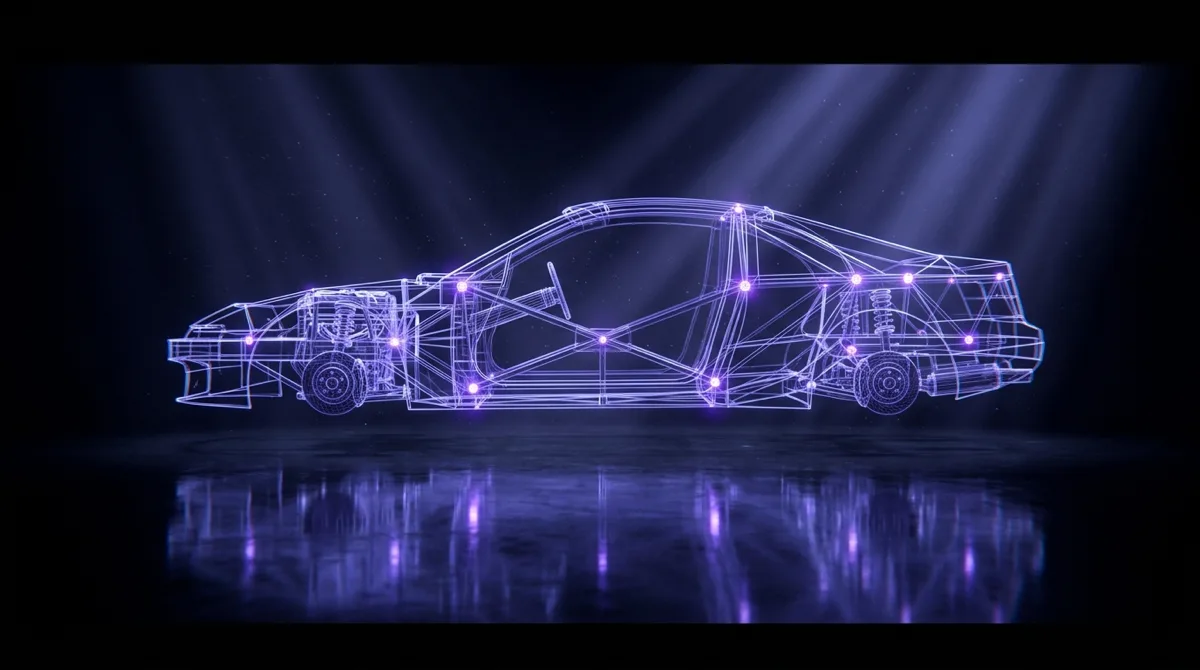
Automotive has the most mature ecosystem in the digital product passport space, for a simple reason: the battery passport becomes mandatory in 2027, and the sector already built a dataspace called Catena-X.
How Catena-X works
Unlike a central platform, in Catena-X each data provider hosts its own data. Sharing happens through:
| Component | Function |
|---|---|
| Digital Twin Registry | Which asset has which submodels, and where |
| Aspect model (SAMM) | The semantic definition of the data structure |
| EDC connector | Authenticated, policy-bound data transfer |
| Usage policy | What the data may be used for |
See AAS and Catena-X.
What it means for suppliers
OEMs and tier-1s request data from their suppliers to populate their own passports. That request arrives whether or not ESPR ever adopts an automotive delegated act. The practical consequence: customer specifications set your timeline.
Typical requests: part identity, material composition, recycled content, carbon footprint and supply chain due diligence data.
The battery passport link
The battery passport is mandatory from 18 February 2027 and is automotive's most concrete DPP obligation. Catena-X and IDTA published a joint AAS guideline for it. See the battery passport guide and Annex XIII data fields.
The ELV regulation
The end-of-life vehicles regime increases requirements for disassembly and material recovery. Part-level material data is the infrastructure for meeting ELV targets. See the ELV regulation.
Preparing as a component supplier
- Collect OEM specifications: which customer wants which field?
- Structure part-level material data. See preparing a bill of materials.
- Build your carbon calculation; OEMs ask for part-level PCFs. See how to calculate a PCF.
- Assess dataspace integration: an EDC connector for large suppliers, intermediary services for smaller ones.
Frequently asked questions
Do I have to join Catena-X?
Not legally, but if your customer requires it, it becomes effectively mandatory. Intermediary services exist for smaller suppliers.
Is there an ESPR delegated act for automotive?
There is no separate automotive group in the Working Plan; demand arrives through the Battery Regulation, the ELV regime and customer specifications.
Do OEMs really want part-level carbon data?
Yes. Their Scope 3 targets require data at part level, and that requirement is entering contracts. See CSRD and product data.