Battery
The Battery Passport for Turkish Battery Manufacturers
The battery passport for manufacturers selling from Türkiye into the EU: SLI and lithium-ion segments, importer, QR, carbon, due diligence and a 12-month plan.

Türkiye's battery industry is growing at two speeds: decades of lead-acid exports on one side; new lithium-ion cell investments, energy-storage integrators and e-mobility pack assemblers on the other. The EU Battery Regulation treats these two worlds differently, but on 18 February 2027 it touches everyone selling batteries into the EU.
This article lists what a manufacturer in Türkiye selling into the EU has to do before 2027. The general Digital Product Passport roadmap is in the DPP roadmap for Turkish exporters; here only the battery-specific items.
Türkiye's battery landscape
The passport duty follows the category, not the chemistry; two products from the same factory can fall under different regimes.
| Segment | Typical product | Passport | Other obligations |
|---|---|---|---|
| Lead-acid SLI makers | Starter batteries | No | QR and label; Article 8 recycled-content documentation (2028) |
| Traction battery makers | Forklift and industrial vehicle batteries | Yes, if above 2 kWh | Carbon footprint (later phase), Article 8 |
| Lithium-ion cell and pack investments | EV cells and packs | Yes, 18 February 2027 | Carbon footprint (Article 7), due diligence, recycled content |
| Energy-storage integrators | Industrial systems above 2 kWh | Yes, 18 February 2027 | Carbon footprint (later phase), due diligence |
| E-mobility pack assemblers | E-bike, e-scooter, e-moped packs (LMT) | Yes, 18 February 2027 | Capacity label, replaceability, carbon footprint (later phase) |
Four conditions for selling into the EU in 2027
- A responsible operator. The operator placing the battery on the EU market is responsible for the passport's accuracy: your importer, or an authorised representative you have mandated in writing. You can run the technical operation; legal responsibility stays in the EU. See economic operators and their responsibilities.
- Hosting and persistence. The passport must stay accessible for the battery's lifetime; the QR domain must be yours, and a backup provider must keep the data alive even if the operator disappears. See data persistence and backup providers.
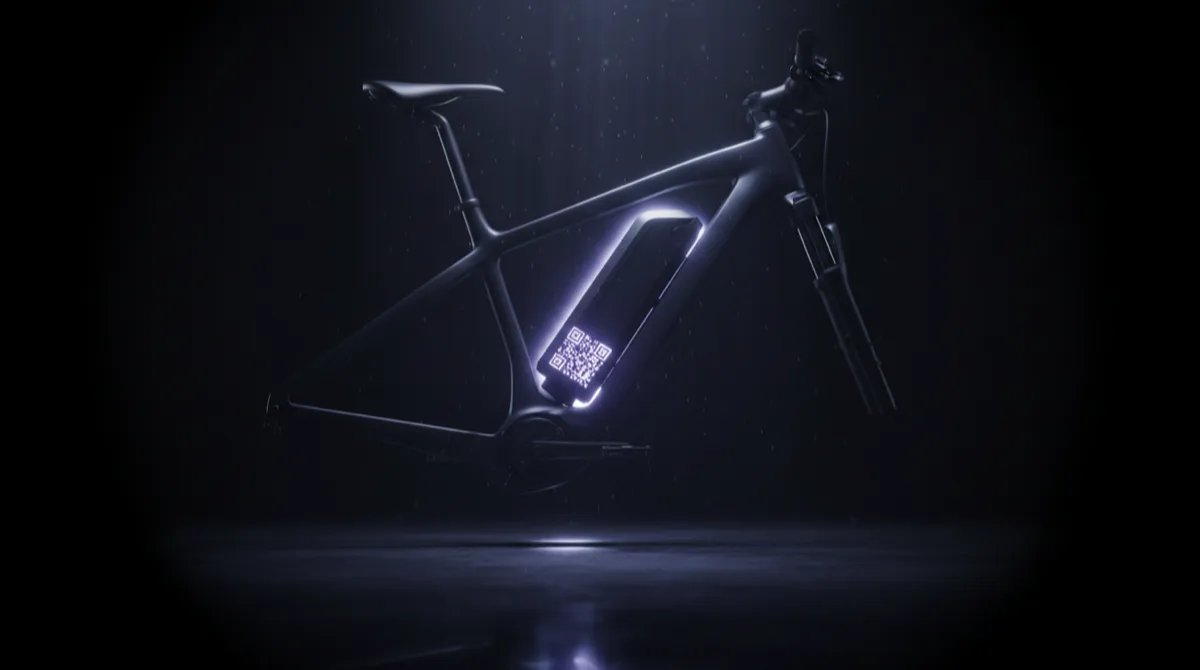
- Label and QR. A permanent QR on the pack links to the passport's unique identifier, alongside the regulation's other symbols and the CE marking. LMT-specific cases are in passports for e-bike and e-scooter batteries.
- Data. Annex XIII's identity, physical and performance fields must be filled in 2027; carbon footprint, due diligence and recycled-content fields follow their own calendars.
Three fields with their own calendars
- Carbon footprint (Article 7): the methodology delegated act for EV batteries is still pending; the declaration date moves with it. Build the calculation now and get inputs from the cell supplier. See the battery carbon footprint declaration.
- Due diligence (Articles 48–52): postponed to 18 August 2027 by Regulation (EU) 2025/1561; the report must be in the passport by August 2028. For a pack maker importing cells from Asia it means documenting the cobalt, natural graphite, lithium and nickel chains. See battery supply chain due diligence.
- Recycled content (Article 8): documentation from 18 August 2028, minimum shares from 2031 and 2036; SLI batteries are in scope. See recycled content in batteries.
Customs and market surveillance
The Battery Regulation is separate from ESPR, so the battery passport is not tied to ESPR's registry mechanism today. Customs checks rely on the classic tools of product law: CE marking, declaration of conformity, labels, QR. Market surveillance authorities read the passport's authority tier; a missing or unreachable passport means a non-compliant product. See DPP checks at customs and market surveillance and DPP enforcement.
A 12-month checklist
- Months 1–2: sort the portfolio by category (SLI, traction, LMT, EV, industrial); which needs a passport, which only a label?
- Months 2–3: split passport responsibility with the importer or authorised representative in writing.
- Months 3–5: map Annex XIII fields to ERP and production records; request model and batch data from the cell supplier by contract.
- Months 4–6: reserve your identity domain, choose the identifier scheme and QR placement, run a print test on the line.
- Months 6–8: set up the carbon-footprint calculation on a pilot model; map the raw-material chain for due diligence.
- Months 8–10: publish pilot passports; have the importer and an outside reader test access.
- Months 10–12: cover all models, contract the backup provider, switch on versioning and the audit trail.
For the general framework, support schemes and funding, see the Türkiye exporter guide.
Frequently asked questions
I make lead-acid batteries; do I need a battery passport?
Not for SLI batteries. QR and labelling duties still apply, recycled-content documentation starts 18 August 2028, and traction batteries above 2 kWh need a passport as industrial batteries.
I have no company in the EU; who publishes the battery passport?
You can host the passport yourself; legal responsibility lies with the importer placing the battery on the EU market or your authorised representative. Settle that by contract.
I import cells from Asia; does due diligence concern me?
The obligation falls on operators placing batteries on the EU market above a turnover threshold, but they will ask you for the chain data. Request origin and chain-of-custody documents from your cell supplier now.